SPARK
40 people have been invited. There are 16 places. Be one of the internal entrepreneurs who shapes what Capgemini becomes next.
This is not a training course.
From day one you're in a team, working a real brief, with a sponsor who has skin in the game. The coaching and programme is there to help you, not the other way around.
No one will stand over you with a timesheet. You don't practise or theorise building something. You build it.
If your proposition is genuinely good, you can continue to lead it with more resources and seed funding.
What you'll take away.
Think, act and be a "Founder"
Build a viable proposition from scratch — navigating unknowns, testing ideas, and being the founder, with hands-on support from experts who've done it before.
Visibility that matters
Your journey, venture and impact goes in front of senior leadership at Demo Day.
Come out a different kind of person
By October you've gone from problem to pitch. Most people in large organisations never get to do that. You'll come out as someone who builds things, and that follows you.
A flexible structure built around you
Teams of four. A heavy week doesn't derail the project. Designed to be manageable alongside your day job.
Demo Day isn't the end.
You pitch to leadership. Real investment on the table. A decision, not a presentation.
It goes further. Seed funding. A dedicated team. Time to lead it properly.
A new Capgemini offer. Something that becomes cemented — and you were the co-founder.
An employee who thinks and acts like an entrepreneur within a business.
Intrapreneurship is
- Making ideas happen inside the system
- The application of entrepreneurial methods
- A practice and mindset
Intrapreneurship is not
- Project management or process optimisation
- Side-of-desk ideation
- Innovation theatre
How the Programme Works
Teams work through the programme from Kickoff on 3rd June through to Demo Day in October, at their own pace. The work drives the rhythm. Support — from Studio Zao, mentors, and your exec sponsor — is structured around you and your team's progress, not a fixed weekly timetable.
What you'll be doing.
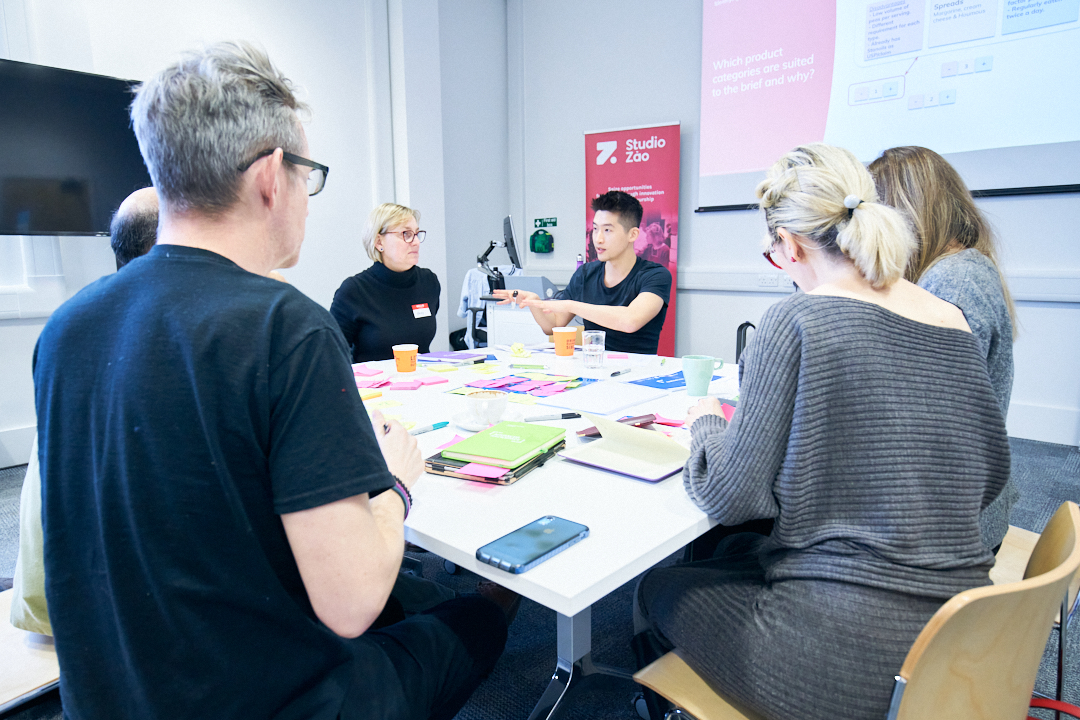
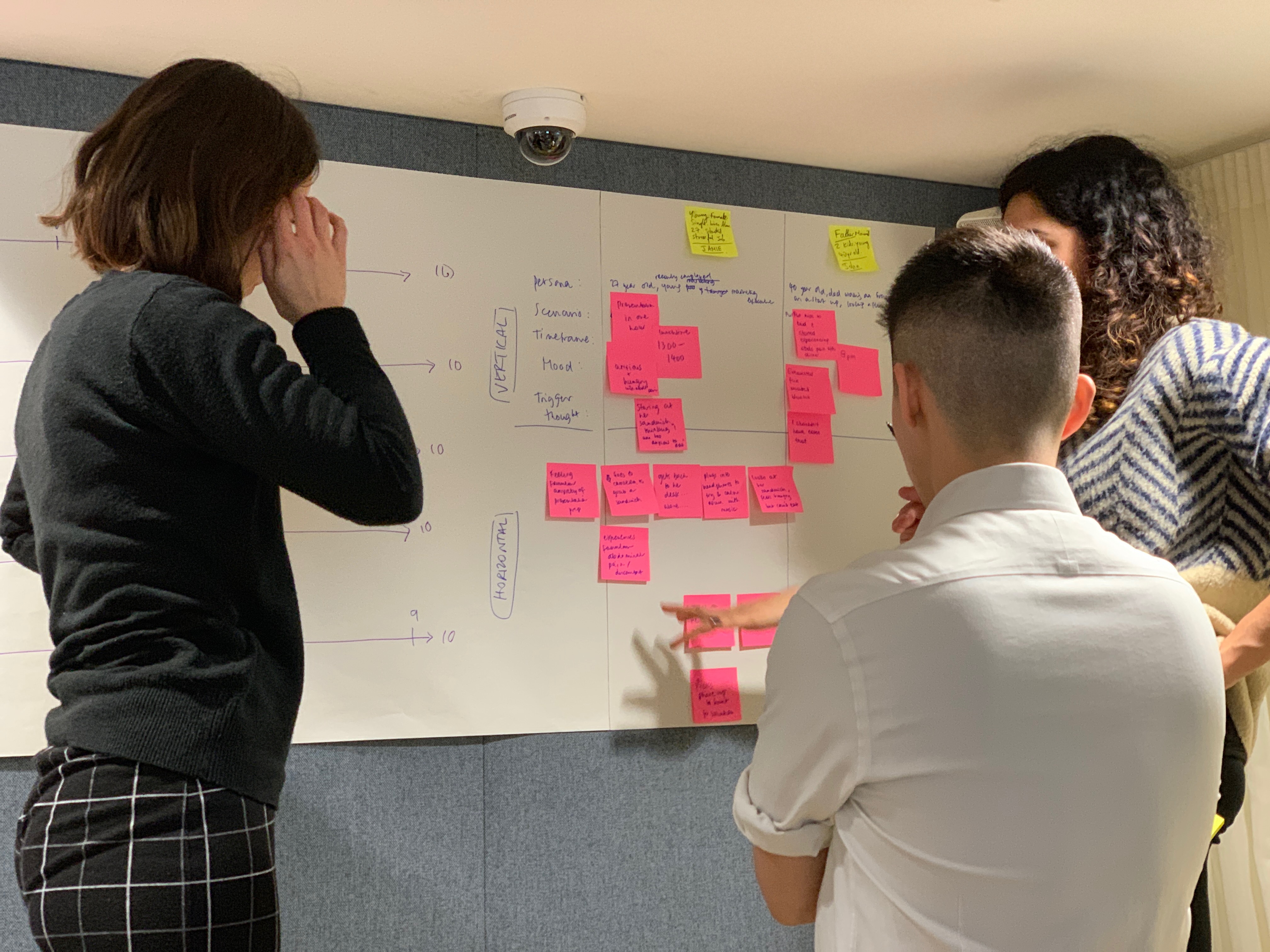
Hands-on working sessions — in person and online — where the real building happens. Studio Zao works alongside your team as collaborators. Problem framing, discovery, ideation, prototyping.
External entrepreneurs and venture builders. Senior internal Capgemini figures. People who've built things inside and outside large organisations — bespoke to where your team is, not generalist training.
Online sessions and video content grounding everyone in lean startup methods and tools. Short, sharp, practical — the foundation for the hands-on work.
Canvases, frameworks, guides, presentations, links and examples — available throughout and yours to keep. Updated as the programme evolves.
A journey from problem to pitch.
Teams move through these modules as their venture develops. Each module is delivered through the mix above — workshops, coaching, and resources.
Introduction to Intrapreneurship & Venture Building
The mindset, the methods, and why this matters at Capgemini right now.
Problem Framing
Getting to the real problem — not the presenting symptom. The most important skill in the programme.
Customer Discovery
Structured listening, interviewing, and evidence gathering. Understanding the problem from the people who live it.
Ideation
Generating, filtering and selecting potential solutions. Rapid, structured, grounded in what you've learned.
Internal Champions & Influencing
How to navigate the organisation — finding sponsors, building support, and opening doors.
Validation: Assumptions, Testing & Experimentation
De-risking your proposition before you build. Running lean tests to gather real evidence.
Prototyping for Experiments
Going further with your strongest ideas. MVPs, build-measure-learn cycles.
Business Cases & ROI
Making the case for your proposition — for the people who will decide whether to fund it.
Pitching & Positioning
Communicating your venture compellingly. Structured, powerful, and tailored to Demo Day.
Key Dates & Programme Phases
Teams move at their own pace — dates below mark milestones and approximate phase windows, not fixed weekly sessions.
Three Areas. Real Problems. Yours to Solve.
All three areas came directly from Capgemini and HMRC's strategic canvas — genuine priorities, with sponsors who have skin in the game. Pick the one that won't leave you alone.
Young People
HMRC's relationship with young people shapes the next 40 years of public trust and compliance. Young people are navigating public services that weren't built with them in mind — fragmented delivery, linear assumptions about education and work, compliance cultures that kill confidence, and AI systems at risk of embedding the same biases at scale.

YP1 Social Value: Real Support for Young People
Disconnected public services fail young people when it matters most. Capgemini would like to leverage its strong social value capability to provide practical support to young people that helps them navigate public services and thrive, with a focus on non-traditional, non-linear pathways and interactions.
Public services that support young people are often delivered through disconnected systems with limited data sharing, resulting in fragmented understanding, delayed interventions, and missed opportunities for early support. Without joined-up services and appropriate data-sharing agreements, public bodies lack a holistic view of young people's needs, meaning support is frequently reactive, inconsistent, or poorly timed. How can Capgemini enhance its social value function to better educate young people about the public services they may engage with — and help our client design and govern systems that responsibly share data and operate as an integrated whole — so that every young person receives the right support at the right time?
YP2 Ensuring Public Services Reflect the Real Journeys Young People Take
Public services are often built around a simple education-to-work journey. Capgemini needs to help clients redesign them to better support the many different pathways young people take and ensure everyone has fair access to skills, work, and opportunity.
Public services are often designed around a narrow, linear transition from education to work, which does not reflect the diverse pathways young people now take into adulthood. Those who follow non-linear routes — such as returning to education, entering work without formal qualifications, or moving between learning and employment — can struggle to access appropriate, timely support. How can Capgemini help our client design public services that recognise and support both conventional and non-linear pathways, ensuring all young people have equitable opportunities to develop skills, access work, and realise their potential?
YP3 From Compliance to Confidence: Unlocking Young People's Economic Potential
Public services often focus too much on rules and avoiding risk, leaving young people afraid to make mistakes and lacking the confidence needed to engage positively with the economy. Capgemini needs to help clients design services that encourage optimism, confidence, and opportunity.
Public-facing services often focus on compliance and risk, unintentionally shaping young people's engagement with the economy around fear of failure rather than opportunity. As a result, many young people lack the confidence, ambition, and entrepreneurial mindset needed to navigate economic systems and see themselves as active participants in shaping their futures. How can Capgemini help our client design public services that inspire economic and societal ambition — empowering young people with optimism, agency, and the confidence to take informed risks and pursue opportunity?
YP4 AI Everywhere, Guidance Nowhere: Fair and Empowering AI for Young People
Young people are using powerful AI tools without enough knowledge or guidance, and AI systems risk embedding bias against non-traditional life paths. Capgemini needs to help equip young people with AI skills and help clients design AI systems that are fair, inclusive, and empowering.
Young people are increasingly exposed to powerful AI tools without the knowledge, skills, or ethical grounding needed to use them safely and responsibly. In the absence of clear guidance, this gap risks widening existing inequalities. At the same time, AI-driven systems increasingly embedded into decision-making risk reinforcing biases towards traditional, linear pathways — disadvantaging young people with non-linear life paths or from minority backgrounds. How can Capgemini help its client enable young people to develop the understanding and ethical awareness required to engage with AI responsibly — while ensuring AI-enabled services are designed to deliver fair, inclusive outcomes for all?
AI & Intelligent Operations
AI is already reshaping how both Capgemini and HMRC operate — from how engineers are trained to how citizens interact with tax services. These briefs tackle the hard questions: how to redesign an organisation around AI rather than bolt it on, govern machine-to-government interactions before they become a policy problem, and build intelligent services that are genuinely helpful without crossing legal, ethical, or trust boundaries.

AI1 Reinventing Roles, Skills & Delivery for an AI-First Capgemini
Capgemini is rapidly expanding its AI capabilities, but needs to redesign its operating model, roles, and ways of working so AI and people collaborate by design — starting with the next generation of engineers.
Capgemini is rapidly scaling its AI, Generative AI, and Agentic capabilities, yet much of the operating model remains rooted in human-first assumptions where AI is added as a tool rather than a core participant. This challenge is especially acute for Early & Emerging Talent engineers, where traditional learning pathways risk becoming misaligned with the capabilities now required. How can Capgemini intentionally redesign its operating model and professional roles so that AI and humans collaborate by design, and the next generation is equipped to engineer AI-first systems rather than simply use AI as a productivity tool?
AI2 When Machines Call Government: Governing AI-to-HMRC Interactions
AI systems are already interacting directly with HMRC, creating risks around security, fairness, and service capacity. Capgemini needs to help HMRC define a clear strategy to safely manage machine-to-government interactions.
AI and agentic systems are already interacting directly with HMRC — including making automated phone calls into contact centres. Without a clear policy and operating model, HMRC faces risks around service integrity, security, fairness, and capacity. How can Capgemini help HMRC respond to and govern this emerging reality — whether to restrict machine-initiated contact or proactively define a strategy that enables safe, efficient, and future-ready AI interactions with public services?
AI3 Beyond Tools: Scaling AI-Enabled Intelligent Operations at HMRC
HMRC has strong digital foundations across Finance, HR, and corporate operations. Capgemini now needs to help it safely scale AI-enabled Intelligent Operations — improving efficiency and staff experience while maintaining trust, governance, and human judgement.
HMRC is well positioned to build on its digital foundations as AI capabilities mature. Advances in intelligent automation and agent-assisted workflows create an opportunity to further augment professional functions — enhancing decision support, improving operational insight, and automating routine activities — while preserving human judgement and accountability. How can Capgemini help HMRC consistently and safely integrate AI-enabled Intelligent Operations so that automation improves efficiency and staff experience, while remaining aligned with governance and assurance?
AI4 Can AI Democratise Coaching at Capgemini?
Capgemini invests heavily in coaching but its reach is limited. The challenge is whether an AI-enabled coaching agent could provide accessible, scalable support to everyone while maintaining quality, trust, and a human-centred approach.
Capgemini invests significantly in professional coaching, but the reach of one-to-one coaching is inherently limited by cost, availability, and capacity. How can Capgemini extend the benefits of professional coaching to everyone in the practice, by exploring whether an AI-enabled coaching agent could provide accessible, scalable, and always-available developmental support — while maintaining quality, trust, and alignment with Capgemini's human-centred approach to growth?
AI5 Can a Digital Assistant Become the Face of Tax Trust?
HMRC has moved services online and now has the opportunity to use AI-powered digital assistants to guide citizens through complex tax journeys — but must do so in a way that is trusted, secure, and stays on the right side of the guidance/advice line.
As AI capabilities mature, there is an opportunity to evolve HMRC's mobile services towards intelligent digital assistants that proactively guide citizens across complex tax journeys — while maintaining trust, accessibility, and legal clarity around guidance versus advice. HMRC has a statutory obligation to provide guidance, not personalised advice — a distinction becoming harder to maintain as Agentic AI enables more conversational, context-aware interactions. How can Capgemini help HMRC define the role of a trusted "tax companion" Digital Assistant that improves experience and compliance at scale — helpful, trusted, and lawful by design?
Capgemini Commercial
Government is shifting from outsourced delivery to product-centric thinking. The firms that move first win. Will that still be Capgemini? These briefs focus on commercial positioning — how to remain a credible, value-adding partner as HMRC shifts towards off-the-shelf products, and how to translate Capgemini's cross-industry knowledge into insight that lands in a public-sector context.

CC1 Winning When HMRC Buys: Repositioning Capgemini for a Product-Centric Era
HMRC is increasingly choosing ready-made technology instead of building from scratch. Capgemini needs stronger skills in product understanding, supplier management, and commercial decision-making to stay a trusted partner.
HMRC is increasingly choosing to buy ready-made technology products rather than building systems from scratch. This creates new challenges: relying more on external suppliers, less control over design decisions, and new skills required to manage products across their lifespan. For Capgemini, being good at building custom systems is no longer enough. How can Capgemini adapt — evolving its skills, ways of working, and services to remain a trusted partner in a more product-focused and commercially driven technology environment?
CC2 Turning Cross-Industry Insight into HMRC-Relevant Advantage
Capgemini has valuable cross-industry insight, but needs to adapt and translate it so it is clearly relevant to HMRC's public-sector responsibilities, risks, and legal duties — rather than reading as generic best practice.
Capgemini holds deep insight from across industries on how digital, data, automation, and AI are reshaping operations and customer experience at scale. However, these insights are often generated in commercial contexts that don't directly map to HMRC's regulatory obligations, public accountability, or operating constraints. How can Capgemini consistently translate its cross-industry insight into HMRC-relevant perspectives — credible, actionable, and aligned with public-sector realities rather than perceived as generic best practice?
Be one of the intrapreneurs who shapes what Capgemini becomes next.
The application takes around 10 minutes. We want to know how you think, what draws you to a brief, and what kind of entrepreneur you might be. There are no right answers — only honest ones.
Apply Now →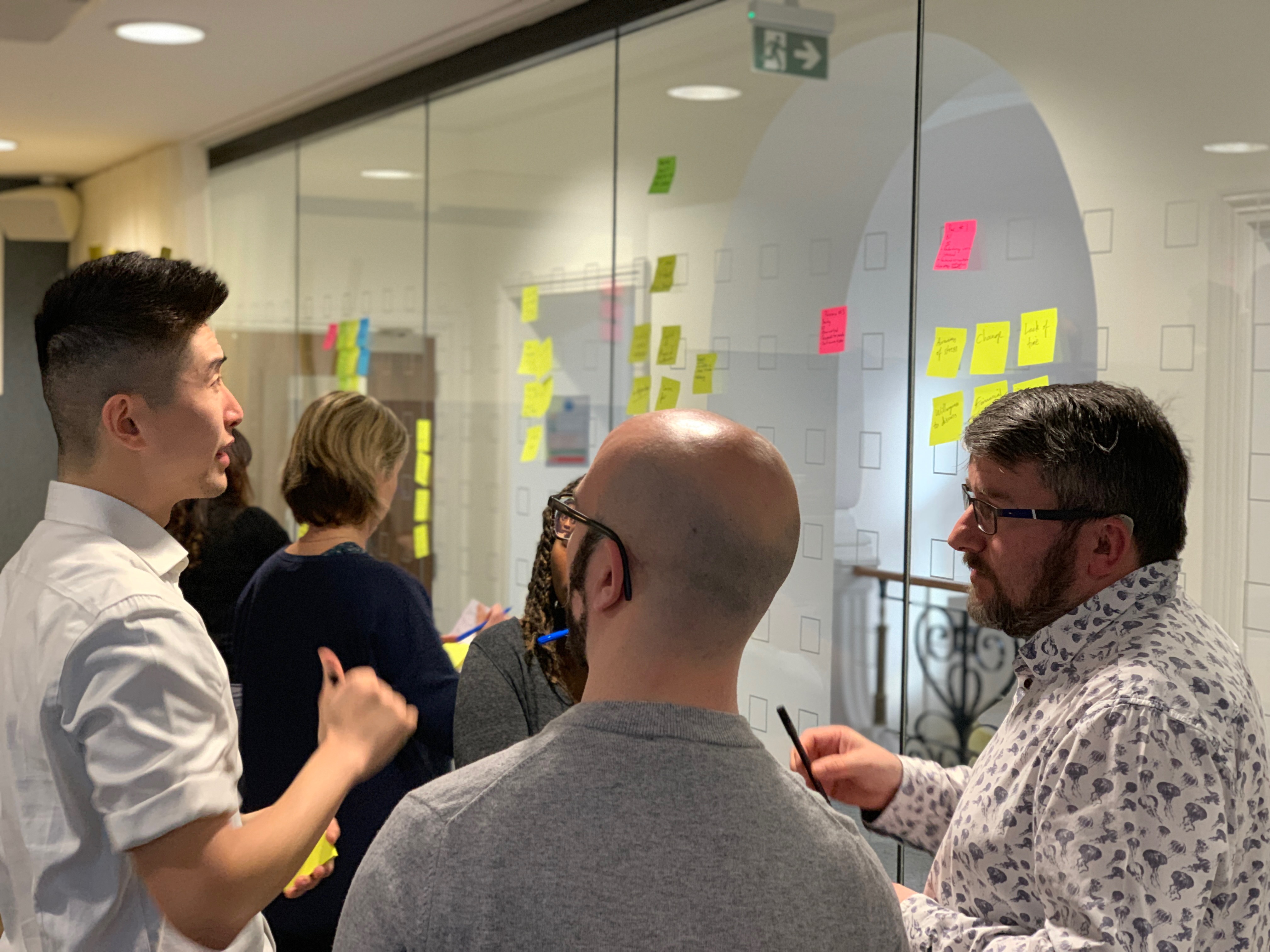
Why apply.
The best propositions at Demo Day receive real funding and resource to continue. You don't pitch into a void.
Exec sponsors are involved from day one. Your work goes in front of senior leadership at Demo Day.
Going from problem to pitch, with mentorship from entrepreneurs. Most people in large organisations never get to do this. That changes how you operate, permanently.
These are the criteria we assess applications against.
We're not looking for a particular background or skillset. We're looking for people who are genuinely invested in a problem and ready to move.
Evidence that you're genuinely motivated to see this through — not just interested in the idea of the programme.
Curiosity about the real problem, not just the brief title. Do you understand what's actually at stake?
Awareness of who is affected by this problem and what it looks like from their perspective.
Comfort with uncertainty, bias for action, willingness to test assumptions and be proven wrong.
Evidence of doing things without being asked — inside or outside of work.
Teams are built to complement each other. We look at the overall cohort, not just individuals in isolation.
Background and seniority matter less than whether you're ready to move.